


Polythene Bag Manufacturing
Polythene.co.uk is a specialist polythene website but that doesn't mean we only deal in polythene sheeting.
This website is brought to you by Polybags - the UK's number one polythene manufacturer - and, as the name suggests, we know a thing or two about polythene bags as well!
Polybags stocks over 100 million plastic bags - from carrier bags to mailing bags and everyday black bin bags to specialist waste sacks.
Any size, shape, colour or strength, we've got the polythene bags you need - and if we don't, we can make them for you.
As Polybags are manufacturers, we make all of our own plastic bags so if you have very specific bag requirements, then we can meet these for you.
What's more, the fact that there's no middleman between you and us means that your polythene bags get to you quicker and cost less. It's a win-win!

How polythene bags are made
The manufacturing of polythene bags begins with the extrusion of polythene film, which is blown and then flattened into a layflat tube using a blown film extrusion line.
Polybags operates 13 extrusion lines around the clock to produce polythene on a 24-hour basis. Some polythene stays in the form of tubing or sheeting - see polythene film manufacturing for details - whilst the remainder is converted into polythene bags, which we focus on here.
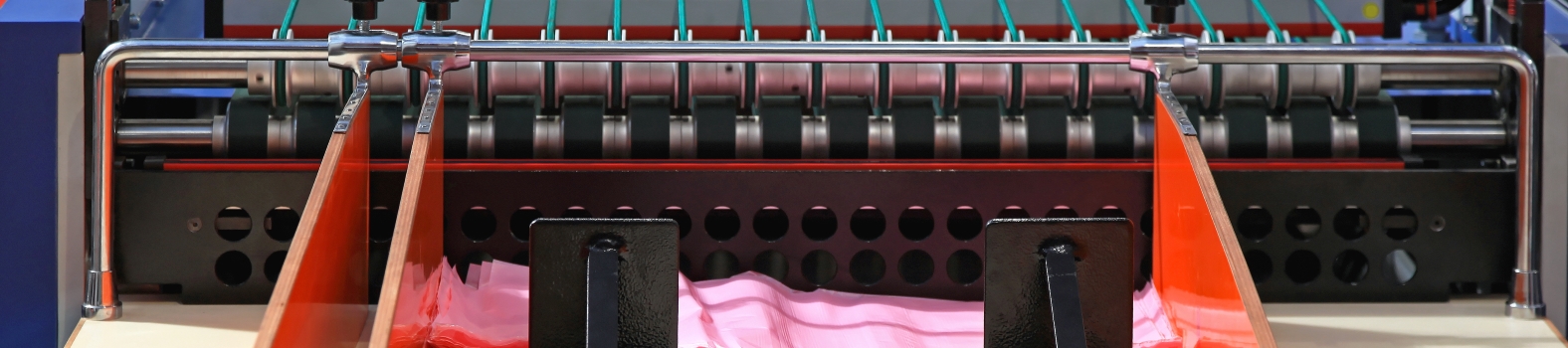
The bag-making process begins as the polythene layflat tubing moves from the extrusion line around a series of rollers to a conversion line - or converting station - where it is treated, printed, cut and sealed in a specific way to convert into a series of a particular type of polythene bag.
Sometimes rolls of layflat tubing are wound onto the roll straight off the extrusion line and then loaded onto the beginning of the conversion line at a later time to begin the bag-making process. Either way, by the time the polythene film reaches the conversion line it has been pulled tight around the rollers to provide sufficient tension to treat, cut and seal the polythene bags.
If bags are being printed then they first pass through a treatment point to prime the surface of the polythene for printing, before passing through the printer itself.
At this stage, Polybags can customise the polythene bags with a company logo or design of your choice, printed on one or both sides of the bag. See the printed polythene bags section below for more details on our bespoke printing service.
What some people say about polythene
polythene suppliers Envelopes
polythene suppliers envelopes are a sensible selection when light protection is enough and additional packaging would only add weight, waste and handling time. The material requirements to be robust at the corners, because that is where tearing often beginnings when packs are picked or dropped into tote bins. A clean seal matters also, since a weak seal can open below pressure in transit or while cartons are being stacked. The optimal results come from a consistent gauge and a size that fits the contents closely, leaving small room for movement and rubbing. That makes the pack easier to handle and less likely to arrive scuffed or split.
Big polythene suppliers bags are a practical method to contain dirty or damp items when mixed stock has to transport fast. They stop moisture, mud and loose debris from spreading into cleaner cartons, paperwork or hanging products, which saves time at the receiving stop and cuts the chance of handling damage. The proper value is not only containment nevertheless control: one bag can separate awkward soft products from the rest of the consignment without slowing the dispatch process. If the film is also light for the load, sharp edges or rough handling will split it before it reaches storage, so gauge must suit the job. A bag that survives the journey retains the all load easier to manage.
Large polythene suppliers bags suit fat, fast-moving stock because they reduce the number of individual wraps, ties and boxes needed at the packing bench. That makes them easier to issue in repeated production runs and assists warehouse staff deal with reserve stock without slowing the line down. A single bag can also improve select-face efficiency, since there is less secondary packing to strip away before products are moved on. The trade-off is apparant: if the closure is weak or the bag is handled roughly, dirt and handling damage soon acquire in. Used carefully, they retain the process simple and the stock moving.
A grey opaque polythene suppliers mailing bag suits the sort of despatch work where contents must transport quickly and stay out of sight. The opaque film conceals product detail, gives a cleaner presentation at the point of receipt, and normally offers enough toughness for clothing, soft products, and other low-risk items that do not need a carton. At 235 x 320mm, the format works well for smaller parcels and retains packing stations moving because the item slides in without much fuss. That size is also easier to store and select than bulkier mail bags. For normal mail-out work, this type of bag is a practical method to cut handling time without adding unnecessary material.
bag manufacturers EPA7 230 x 345mm C4 Extra Strong Padded Bubble Lined polythene suppliers Envelope - White (Pack of 100) - B006O8ADJK
A padded polythene suppliers envelope like this is chosen when normal paper mailers would not cope with rough handling or sharp corners. The bubble lining spreads pressure across the contents, while the outer polythene suppliers skin gives better resistance to moisture, scuffing, and split seams amid transit. That matters on mixed package runs, where mail can be crushed below heavier cartons or dragged across conveyours and cages. The C4 size also suits documents, slim mailers, and small product packs without forcing them into oversised packaging. A tougher envelope reduces damage claims and rework at the dispatch stop, which saves time as well as stock.
Biodegradable polythene suppliers bags only solve part of the packaging problem, because the proper issue is how the material behaves once it has been used and thrown away. A bag that smashs down more readily can still be poor packaging if it tears also easily, loses seal strength, or creates handling trouble in a warehouse or shop. That means specification matters: thickness, gauge, and the intended load all need matching properly, otherwise the bag may fail long before disposal becomes the main concern. In trade terms, a bag should do its job in packing, storage, and dispatch first, then leave less trouble behind. That is why material selection has to beginning with performance, not only disposal labels.
Polyolefin film suits plenty packaging lines because it seals cleanly without the sharp odour or fumes associated with a few older materials, and that makes the working area easier to manage. In a busy packing room, cleaner sealing behaviour assists operatours retain machines running with less interruption from residue, burnt edges, or weak welds. The film also folds and shrinks well enough for secondary packing, which matters when cartons or mixed packs need a tidy wrap without excessive gauge. A material that behaves consistently on the sealer saves time at dispatch and gives a neater stop on the pallet.
Layflat Tubing
Layflat tubing gives packing lines a flexible method to match the wrap or bag length to the product, so articles do not have to be squeezed into the nearest off-the-shelf size. That saves time at the bench, particularly where consignments vary in length or shape, because one reel can cover plenty alternative jobs with a simple cut-and-seal process. It also cuts the amount of empty space left inside a pack, which assists pallet stability and makes better use of trailer cube. A well-chosen gauge of polythene suppliers will still give decent puncture resistance without adding needless weight, so the result is a neater, lighter pack that transports through the warehouse with less fuss.
polythene suppliers tubing has to be matched to the size and shape of the product, not chosen by guesswork. A sleeve that hangs also loosely lets the item shift in transit, which soon labels folded edges and rubs corners against each other. If it is manufactured also heavy, the pack becomes fat, wastes material and takes up more pallet space than needed. The practical aim is a snug fit that controls movement without making loading awkward, and that balance normally saves more trouble downstream than it costs at the packing bench.
Waste bags work optimal when they are treated as a stock item, not an afterthought, because running out fast creates a messy problem. Bulk packs make sense for normal use, particularly where shorts are carried in pockets, lead bags, or kept by an entrance for fast grabs before a walk. The practical issue is not only quantity nevertheless consistency of film gauge and seal quality, since a weak bag is no use when handling soft waste. A tidy pack that stores well and dispenses cleanly also speeds up the routine. Good stock control here saves hassle later and retains the clean-up habit proper.


Welds, gussets, skirts & handles
Polybags can manufacture polythene bags in any way you require to suit your specific needs. Our 12 converting machines allow us to cut, shape and seal polythene bags in all manner of ways to make them the ideal fit for your job.
Whilst you don't need to know how this process happens - we can take care of everything! - the brief guide below provides a few details for those of you interested in the bag-making process and how we convert polythene film into the widest range of bags available online.
As the polythene leaves the printing station, it is cut to the correct size for the bags in question, using either side-weld or bottom-weld production - terms that we explain below (see bullets & diagrams) along with a few others that you might come across in the polythene bag-production process.
- Bottom-weld bags - using a layflat tube of polythene as the starting point, bags are created with a single weld across the width of the tube, providing a strong seal at the base of the bag, and cut to length at the top of the bag. Also known as bottom-seal bags, these bags are generally stronger than side-seal bags.
- Side-weld bags - using centrefold sheeting as the starting point, the fold in the sheeting becomes the base in the bag, which is welded together on both sides, leaving the top of the bag open. Also known as side-seal bags, these bags are usually more economical to produce so keep costs down, although they aren't as strong as bottom-weld bags.
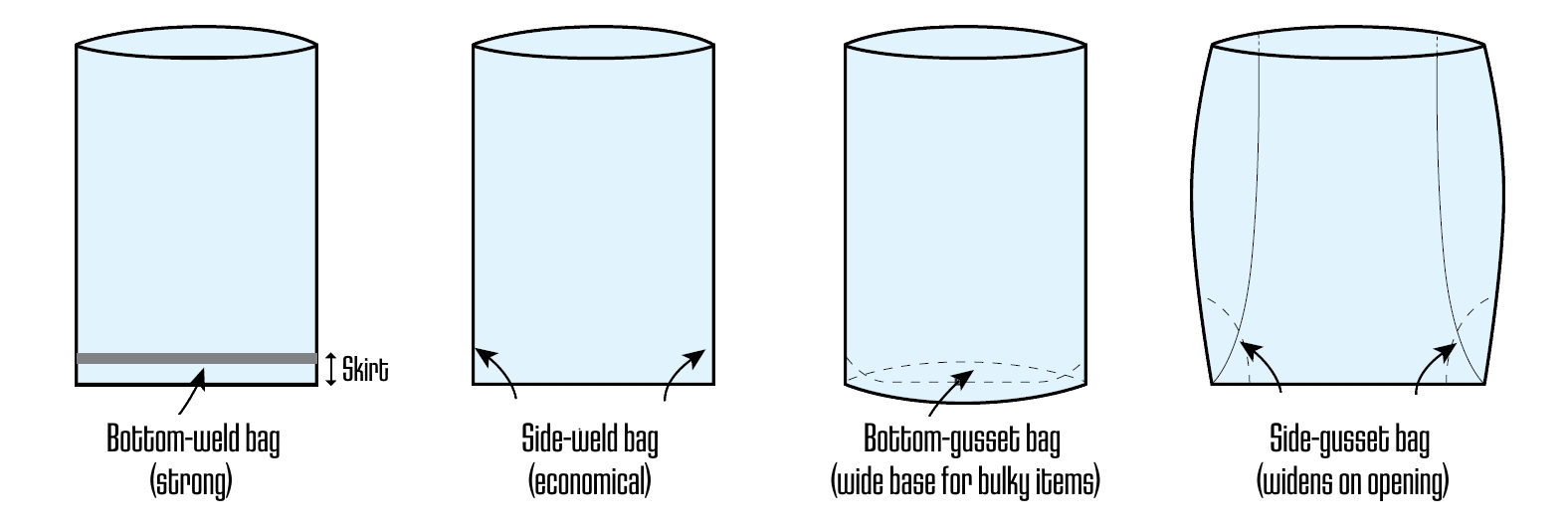
- Gussets - when extruding polythene, the film or tube can be folded to provide extra volume in polythene bags produced off that roll. Gussets can be inserted into bags at either the base or along the sides (or both) and, when opened, provide extra space in the bag for large or bulky items.
- Skirts - a polythene bag's skirt is is the strip of polythene that sits outside of the bag, attached to the seal. Skirts can be found either at the base of the bag (in bottom-weld bags) or along the sides of the bag (in side-weld bags).
As well as being cut and welded to size, the bag-conversion process also involves cutting handles out of the bags and/or adding seals to the bags where necessary.
Bag handles are punched out of the bag by a heated tool in the same shape as the desired handle. This melts and punches through the polythene to leave a handle in each consecutive bag working its way through the conversion line.
This same method can be used to add perforation holes to the bag - usually around 6mm in size - which add ventilation to the polythene bag where required.


Finally on the conversion line is the process of adding a seal to the polythene bags, when required. Polythene bags may close in a variety of ways, but two of the most popular seals produced by Polybags are as follows:
- Adhesive-strip seal (single-use seal) - this type of seal is found on bags with a flap or lip which is folded down to seal the bag, such as mailing bags. These bags are manufactured using J-fold sheeting, with the extra flap of polythene used as the lip of the bag, whilst the lip itself has a double-sided adhesive strip stuck to it. One side of this adhesive strip connects it to the bag, whilst the other side is covered with a thin plastic film which the user tears away when ready to seal the bag, before pressing down to close. The tight bond formed by this seal means the polythene bag has to be cut or ripped to be open, hence bags of this type are not resealable.
- Grip or zip seal (reusable seal) - these types of seals turn a sealable bag into a resealable bag. The grip seal - also known as the minigrip or grippa - is an integral plastic seal which is cut and heat-bonded to the bag along its opening during the final stages of the conversion process. The seal is formed by a single plastic strip inserting directly in between two adjacent plastic strips on the other side of the opening. This seal simply squeezes tight shut between the fingers, whilst it can be pulled open with the gentlest of tugs. Zip seals - which include slidergrips, zippers and zip-lock bags - feature an external zip or plastic clip which can be pulled up and down the exterior of the bag to open and close the seal.
Printed polythene bags
If you want to take your business to the next level with quality printed-polythene packaging then you've come to the right place.
Polybags are the UK's number one provider of bespoke packaging, with the very best prices on the web and an instant quote service on both printed carrier bags and printed mailing bags - you can get an online quote in 60 seconds at any time, 24-7!
There's no better way to advertise your business than by getting your own personalised design or company logo printed directly onto your packaging.
With a smart, professional look and feel, Polybags' quality printed packaging makes an instant impact with customers and leaves a lasting impression.
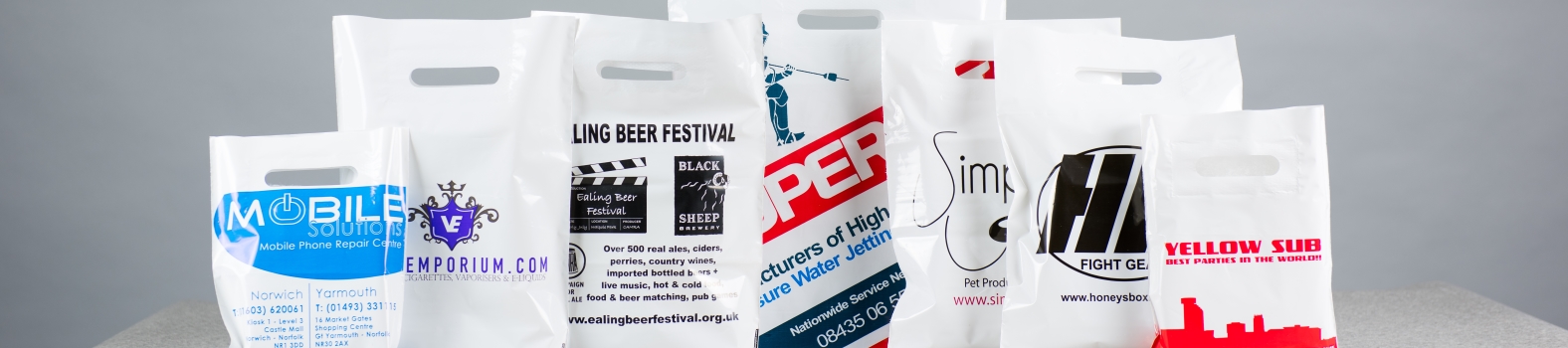

Printed carrier bags
Here are a few good reasons why Polybags is the place to come for your printed carrier bags:
- Advertise for free - your design, your way
- From just 4p a bag - lowest prices online
- Quality 55 micron polythene - print on one or both sides of the bag
- 5 bag sizes to choose from - simple, fast & cheap
- Small minimum order (1,000 bags) & fast, free delivery
How to look knowledgeable about polythene
packaging manufacturers suppliers Bags
packaging manufacturers suppliers bags only work properly when the film gauge stays within tight limits, because even a small thickness shift can change tare weights, weaken stacks and upset counting on fast packing lines. LDPE is still the normal selection where soft handling and proper heat sealing matter, while HMHDPE is often picked for stiffness and downgauging, particularly when a firmer bag assists on the shelf or in a picking area. PP may be used where clearer film and sharper print registration are needed. A job that beginnings with the proper resin and stable extrusion will behave better through bagging, dispatch and storage, which saves awkward adjustments later.
Our top sellers in polythene suppliers Envelopes
polythene suppliers envelopes suit mailing jobs where low weight and protection matter above rigid box strength. The film retains out rain, dust and normal grime, so contents reach sorting and delivery in better condition than they often would in paper packs that soften or crease easily. Because the material flexes instead of cracking, it copes well with bending, squeezing and the rough handling that happens in bags, cages and vans. That makes it a sensible option for flat products, documents and items already protected inside, where a fat carton would only add dead weight and waste space.
Big polythene suppliers bags improve handling when fat or awkward products need to transport quickly through the warehouse, because one big pack can replace several smaller wraps and cut down on secondary packing. That assists at the select face, where speed matters and loose items can be gathered into one load instead of being split across alternative cartons or sleeves. The light weight of the film also retains added pack weight low, which matters on products that are already heavy enough. Even so, the bag has to suit the load, or the tidy-looking pack becomes awkward to lift and harder to control in transit.
Large polythene suppliers bags need to match the shape and weight of fat furniture, or they soon become a weak point in the handling chain. Sofas, mattresses and similar products put stress on corners, seams and folds, so a bag that is also light can split where it rubs against pallet boards, straps or wrapping gear. Heavier gauge film gives better resistance to scuffing and snagging, while still adding small additional weight to the consignment. A proper fit also retains the cover from slipping out of place amid storage. The proper specification reduces damage before the load even leaves the warehouse.
A robust polythene suppliers mailing bag in a 595 size works optimal where garments, printed matter, or other flat products need simple protection without adding much bulk. Opaque film gives a cleaner appearance and retains the contents out of sight, which matters when mixed consignments transport through sorting, dispatch, or home delivery channels. The gauge has to balance toughness with flexibility, because a bag that is also light splits at the corners, while one that is also stiff can be awkward to fill and seal. Good quality film also assists the bag lie flat in storage and feed more smoothly at packing stations. That retains packing fast without inviting handling damage.
bag manufacturers DXD Extra-Strong polythene suppliers Envelope Opaque Review
A polythene suppliers envelope earns its retain when strength and presentation have to work together, and the opaque type does that better than a flimsy mailer that splits or shows contents through the film. In practice, the sheet thickness, weld quality and seal line all matter above a glossy description, because a weak edge or a poor seal turns into returns, complaints and handling damage. Opaque film also gives a cleaner see on despatch lanes, where mixed consignments pass through sorting, stacking and transit without drawing attention to what is inside. If the material is well chosen, the package feels secure from the first lift to the last delivery scan.
Biodegradable polythene suppliers bags only work properly when the all supply chain treats them as a controlled material rather than a normal-purpose substitute for normal plastic. A bag that sees similar on the pallet can behave very differently in storage, with heat, moisture and stock age affecting strength, opening, and seal quality. If the gauge is also light, handling damage rises amid filling and despatch; if it is also heavy, waste and cost proceed up without adding much benefit. Clear specification and stock rotation assist prevent mixed batches from causing trouble on the packing line.
?2024 polythene suppliers UK Ltd | Web Design and Marketing by Zest Digital.
polythene suppliers UK has built its reputation on showing that a polymer business can improve environmental performance without losing sight of practical packaging requirements. Awards matter less for the shelf than for the shop floor, nevertheless they do tend to reflect solid work on material selection, waste control, and converting efficiency. A firm that retains trimming down scrap, improving gauge control, and thinking about stop-of-life recovery is normally making packaging that behaves better in storage and transport as well. That kind of proper improvement is more useful than a glossy claim, because it assists retain both performance and sustainability on the same side.
Layflat Tubing Manufacturers
Layflat tubing earns its place when packing lines need flexibility without cluttering the warehouse with dozens of bag sizes. A reel can stay flat until the last moment, then be cut and sealed to suit long extrusions, strange-shaped parts or consignments that change depth from order to order. That reduces dead stock and assists select-face efficiency because the same format serves above one job. The trade-off sits in control: gauge consistency, melt flow and seam response have to stay tight, or the tube will split, seal badly or waste material through above-specification. A well-set specification retains reel handling tidy and the packing bench moving without creating avoidable scrap.
polythene suppliers tubing works optimal when the pack size has to suit the product, not force the product into a fixed bag. When cut from reel at the packing bench, it gives a straightforward method to make sleeves for long parts, mixed kit packs and awkward shapes that would waste space in prepared-manufactured formats. That flexibility often improves select-face efficiency as well, because less alternative bag sizes need to be stored and fetched. It also assists secondary packing stay cleaner, with less loose film and less offcuts building up around the line. In practice, a superb tubing selection makes the all packing area tidier and faster to manage.


Printed mailing bags
If you really want to impress your customers with your deliveries, get printed mailing bags with your design from Polybags today. Here are a few good reasons why:
- Instant impact on delivery - stand out from the crowd
- Reinforce your branding & advertise for free
- 9 sizes to choose from - from mini to jumbo
- High quality, co-extruded bags which feel just as professional as they look
- Lowest prices online & fast, free delivery
Personalise your packaging
Our printed packaging range doesn't stop with carrier bags and mailing bags. We print garment covers for dry cleaners, clinical waste sacks for hospitals and recycling sacks for companies trying to reduce their eco-footprint.
If you want a polythene bag of any kind printed with your own design or message, please contact us and we'll do everything we can to accommodate your request. Don't forget why Polybags is the best place to come to:
- Free delivery to UK & Ireland (minimum order may apply)
- Number one UK manufacturer
- Experienced & trusted for 50+ years
- First class customer service
- Buy direct & save - cut out the middleman