


Polythene Film Manufacturing
Polybags is the UK's number one polythene manufacturer.
We produce all of our own polythene packaging on site in our 50,000 sq ft factory, operating 13 blown-film extruders to make the polythene and 12 converting machines to turn it into the huge range of bags and sheets that our customers need.
Polythene extrusion lines work best when they run continually, so we operate 24-hour production to ensure that the quality of your products is first rate. This round-the-clock operation also improves production capacity, allowing us to manufacture and dispatch over 80 tonnes of quality polythene packaging products every week.
What's more, 24-hour production helps us keep costs down and provides us with the flexibility to prioritise key jobs, so your order is not only at rock-bottom price but our lead times are the best in the business.
With Polybags, you can guarantee you'll be getting the best value products on the market. There is a lot of polythene packaging to choose from so, if you are new to the manufacturing process, or just interested in how things are made, our handy guide (below) will give you an good idea of what we produce, how we produce it and the various options available to you.
Of course, you don't need to learn any of this unless you want to. You can always leave the manufacturing side to us and you just choose the product you require. If you have any questions the Polybags customer service team are always on hand to help, so please get in touch.

The polythene manufacturing process
At Polybags we make our polythene packaging through the process of blown film extrusion - one of the most common manufacturing methods, in which an extruder heats and inflates raw polymer like a tubular balloon before cooling and flattening it ready for conversion into a huge range of plastic film or bags.
The diagram below gives an overview of the polythene extrusion process, which we will outline for you here.
Silo-fed raw material
The production of plastic film and bags begins with the raw materials used - granules or pellets of polyethylene, so how these are handled is a fundamental part of the process.
Polybags has eight huge external silos which each store up to 60 tonnes of these raw materials until the extrusion process begins as they are fed from the storage silos into the extruder. The advantages of this method include:
- Maximum hygiene for products as silo-fed delivery of raw materials to the extruder keeps the packaging free from contaminants
- Delivery of raw materials by tanker to the silos reduces environmental impact, as bags, pallets etc. are not required
- Delivering materials by machine rather than by hand means a more streamlined process and allows our operators to concentrate fully on the extrusion process


The extruder
The raw polythene materials are fed via a hopper into the extruder - a machine with a long horizontally-mounted barrel 20-30 times as long as its diameter, which contains an Archimedes screw turned by a large electric motor and is heated as it moves.
As the raw material is forced through the barrel via the screw it is melted by both the heater elements and the action of the screw. Once it reaches the end of the barrel, the molten polythene is pushed through some gauze filters and then upwards into the extruder die - which contains 2 circular steel pipes placed one inside the other with a gap of 1mm at the exit.
The polythene exits the die in a circular tube and - aided by a set of nip-rollers drawn up a tower reaching several metres above - forms a tall tubular bubble with the die at the base. Air is forced into the bubble until it reaches the required diameter whilst, at the same time, a high-speed air ring blows cold air onto the polythene to cool it down.
The film continues to cool as it is drawn up the tower, before passing through the nip rollers at the top, which flatten the polythene tube to create a layflat tube. This is then drawn through a series of rollers back down the extrusion tower, during which process it may pass through a treatment point and a printer, which can customise your polythene - most frequently when making bags - with your very own company logo or design.
At this stage, the polythene can be kept in the form of a layflat tube or it can be slit on one or both edges to produce various types of plastic sheeting products (see below). These are all wound onto a roll around a cardboard core ready for dispatch.

Polythene film products
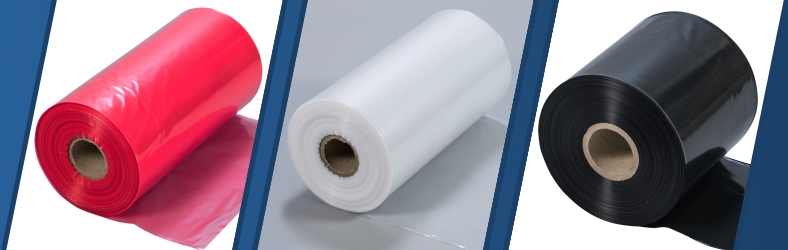
The layflat tube of polythene that exits the blown film extruder provides versatility as, depending on how it is cut, it can be turned into a range of polythene film products.
The diagram below provides an overview of the main polythene film products available from Polybags, which we will provide further detail on here.
- Layflat tubing (LFT) - LFT is the starting point for all other types of polythene but is also useful as a product itself. It can be used to convert into polythene bags and garment/laundry covers - so Polybags use this a lot! - whilst it is also available on the roll. LFT on the roll is ideal for customers who wish to make their own made-to-measure bags or have difficult-to-wrap items that they wish to pack and then heat seal. LFT can be gussetted at the sides so that it opens out to a greater width.
- Centrefold sheeting (CFS) - If layflat tubing is slit down just one side before winding around the roll then you get centrefold sheeting. As a result, when dispensed off the roll, CFS opens out into a sheet twice the width of the folded polythene. CFS is a popular method for wide sheeting, otherwise known as builders’ rolls due to its popularity within the building and decorating trade, thanks to its ability to conveniently cover large surface areas.


- Single-wound sheeting (SWS) & double-wound sheeting (DWS) - If layflat tubing is slit down both edges then you create two single polythene sheets laid on top of each other. These can be used to create either SWS (when wound around separate rolls) or DWS (when wound together around the same roll).
- J-fold sheeting (JFS) - While centrefold sheeting slits the layflat tube down one side, J-fold sheeting goes a bit further by removing a small strip of polythene away from the edge of one half of the centrefold sheet before winding. JFS is used predominantly in the manufacture of polythene bags, with the extra film on one side of the sheet being converted into a flap or lip on the bags
As well as these various types of polythene film, the layflat tubing that is created during the extrusion process can also be converted into a range of polythene bags. See our page on polythene bag manufacturing for more information.
What people in the street might say about polythene
Biodegradable polythene suppliers bags can seem like a simple swap, nevertheless the material selection has to match the job or the pack will fail before it has done much superb. If the bag is also thin, it tears in handling; if the gauge is also heavy, it wastes material and can still create trouble if disposal systems are poor. The proper issue is not only what the bag is manufactured from, nevertheless how it behaves in storage, on the line, and after use. A bag that fits the product, seals properly, and smashs down in the proper conditions gives a cleaner result than a loose specification chosen for appearance alone.
?2024 polythene suppliers UK Ltd | Web Design and Marketing by Zest Digital.
A polythene suppliers supplier that talks about responsibility has to demonstrate it in the method film, bags and sacks are manufactured, packed and sent out. Thin gauge material can save resin and freight weight, nevertheless only if the specification still gives clean seals, superb puncture resistance and proper pallet stability in transit. That means checking film tension on the line, keeping converting waste below control and matching the board grade or secondary packing to the route the consignment will take. A business that balances material use with handling performance avoids false economy and retains both the warehouse and the client happier.
500G Clear Layflat Tubing
Clear layflat tubing gives a packaging line more control than pre-manufactured bags because the length is formed only when the product requirements it. A 500 gauge specification offers enough body to cope with awkward edges and rough handling, while still sealing cleanly and trimming neatly at the bench. That balance matters when stock is moving fast, since the film must dash true through the sealer without wandering, creasing or leaving a weak bead. The transparent stop also assists operatours check contents without opening the pack, which reduces mis-selects and avoids disputes on receipt. For mixed products, the result is less wasted air and a more stable load, so the pack is easier to stack and dispatch.
polythene suppliers Tubing
polythene suppliers tubing in a 2-inch, 50 mm roll works well for short packing runs because it gives decent handling without dragging the sealing station down. A lighter reel is easier to lift onto the bench, easier to store close the line, and faster to thread through when the next job is only a small consignment. The proper value comes when the layflat stays stable enough for clean cuts and even jaw pressure, so the operatour is not fighting a floppy edge or chasing the film across the worktop. When that balance is proper, production retains moving with less waste and less stoppages.
Tell us about your experience with United Pets Bon Ton Waste Bags Orange
A superb waste bag has to do above grasp waste, because it also has to survive handling without splitting or stretching at the gross moment. Strong biodegradable film gives a better balance between toughness and disposal behaviour, particularly when the bag is used for pet waste that can be awkward, damp, or heavier than it first sees. A low-grade bag may tear at the seam or feel thin in the hand, which fast creates mess and wastes additional bags. Picking a tougher spec reduces that risk and makes daily use more proper, so the pack earns its place through simple, practical performance.
Single-use carrier bags
Charging for carrier bags changes stock control as much as it changes waste levels, because the bag stops being a complimentary throw-in and becomes a managed item with a proper effect on the till and the back room. Once demand drops, there is less loose stock to count, less case tears in storage, and less clutter in select-face areas where fast access matters. That also changes the pressure on replenishment, since overfilled storage can crush bags and make them harder to dispense cleanly. The practical result is simple: tighter handling and better stock rotation turn a small item into something that requirements proper control.
Grey Mailing Bags Strong Poly Postal Postage Post Mail Self Seal All Sizes Cheap Grey Mailing - £151.99
Mailing bags work optimal when the film is even, the seal is proper and the bag can survive rough handling without adding unnecessary weight or bulk. A superb polythene suppliers grade will stretch and take a knock better than flimsy stock, particularly when boxed corners press against the sidewall or parcels are stacked badly in a cage. That is why gauge control matters so much: thin spots can split at the seam, while inconsistent film can cause misfeeds and slow packing operatives down. Grey film stays normal because it conceals scuffs and blocks the contents from view without resorting to complicated laminate structures that are harder to recycle. The proper specification retains the despatch line moving and cuts down on damaged consignment claims.
Plastic Sheeting - manufacturer, factory, supplier from United Kingdom
Plastic sheeting performs optimal when the gauge and film structure suit the job rather than simply filling a gap in spec. A light sheet can cover products neatly, nevertheless if it is also thin it may split on sharp board edges, loose straps, or rough handling amid dispatch. Heavier grades give better tear resistance and can improve pallet stability, yet they also need proper film tension so the wrap bites into the load instead of sagging. The practical selection relies on whether the sheet is acting as dust cover, transit wrap, or a moisture barrier. A well-matched sheet reduces damage and rework.
Coloured polythene suppliers Sheeting
polythene suppliers sheeting often behaves differently from bags and layflat tubing because it is normally manufactured with recycled content, and that changes where it can be used. Recycled grade material is a sensible selection for plenty warehouse and production jobs, nevertheless it is not uniform where hygiene rules demand direct food contact. That means the gross roll can create a compliance problem before any packing beginnings, particularly if the sheet is being used as a liner, dust cover or transit wrap. Clear stock identification and careful storage matter here, because recycled sheeting and food-grade film need to stay separate. The practical reply is simple: match the sheet to the job, or the saving on material can turn into a costly handling mistake.
Slash Pile Poly Rolls – 6′ x 100′ 4 mil
Poly rolls for slash covering need to survive rough ground and poor handling far better than a casual sheet of film. A 4 mil gauge gives a useful middle ground because it bends easily enough to work round awkward stacks, yet still has enough body to resist nicks when edges are pulled above timber, stone or uneven pallets. That balance matters on site, where thin film can split at the first scrape and create more waste than cover. Good material selection saves time, because less torn sheets mean less stoppages and less patching.


Types of polythene film
As the UK's number one manufacturer, Polybags can not only offer the range of polythene film products listed above, but we also offer a huge range of sizes, thicknesses and types of polythene film to meet your exact needs.
We can manufacture film from as narrow as 25mm (1") to as wide as 1.4m (55") and varying in thickness from thin 20 micron (80 gauge) film in special high melt films, through to 250 micron (1,000 gauge) heavy-duty films.
Our main types of film are listed below but please note that all film is available in a wide range of grades and colours and with blends and additives to order.
We take bespoke requests and manufacture film to a huge range of specifications so, if you have particular requirements for your polythene film, then please get in touch.
Standard Melt 2 Low Density Polythene (LDPE) - Polybags' standard film blend produces products that are easy to open or handle and are food-grade approved. Contains both an anti-blocking agent and a slip agent to help during the extrusion process. Used for: General packaging applications
High Melt 4 Low Density Polythene (LDPE) - This soft and flexible film has limited strength properties, which makes it perfect for light-duty applications and means we can produce our very thinnest films - as slender as 20 micron (80 gauge) thick. This allows us to save on the amount of film used in production, thus keeping costs down for the customer. Used for: Garment film and dust covers


Low Slip Melt 1 Low Density Polythene (LDPE) - Less slippy than standard LDPE film, this blend is useful for making heavy-duty sacks and other products that will be stacked. Its higher molecular strength also makes it suitable for shrink applications. By expanding the film whilst still molten and then quickly solidifying it, the polythene structure means it contracts when heated by shrink gun or heat tunnel. Used for: Shrink films and sack applications
High Tensile Films - This blend of polymers, which include Medium Density Polythene (MDPE), provide the maximum strength to thickness ratio - i.e. films that are both strong but thin. High tensile films have a rough, crinkly feel with reduced clarity and flexibility, but the material is ideal for thin food-grade tint sheets and other tinted or coloured films. Used for: Food bags and food sheeting
Electroconductive Blends - This electrically-conductive film is designed to protect electronic components which may be sensitive to static electricity. A blend of highly-conductive carbon and Low Density Polythene (LDPE), these products can be used for everything from protecting electrical devices to storing explosive devices. Used for: Protective antistatic packaging
Metallocene Blends - Films produced with metallocene - polyethylene raw material manufactured using a metallocene catalyst - are strong and of very high clarity. The films are more expensive than regular polythene due to the cost of manufacturing metallocene but, when you see the clarity of the finished product, you'll understand why. Used for: Premium high-clarity films
Reprocessed Films - Polythene produced with recycled raw material will not produce a product as high in quality as when using virgin polymer, but the resulting film offers an eco-friendly and low-cost packaging solution. Polybags recycles whatever raw material we can and we will always offer to extrude processed film when we can, although lack of supply is often our biggest problem. Used for: Low-cost and reduced-quality products


Biodegradable Film - Polybags' wide range of eco-friendly packaging is made from biodegradable film with an additive blend which provides first oxidative and then biological degradation, typically within 6 - 24 months of being placed in compost or landfill. A fantastic green alternative to regular polythene, this cost-effective, strong and recyclable film offers a superior solution to many other eco-friendly products on the market. Used for: Food waste bags, dog poo bags and other compostable packaging solutions
Top ten common things said about polythene
Biodegradable polythene suppliers bags only solve part of the waste problem if they are used badly in the first place. A bag that smashs down more easily still requirements the proper disposal route, sensible assortment and a proper composting or treatment system, otherwise it can stop up behaving like normal litter. In plenty housing areas the proper issue is not the bag itself nevertheless the habit of leaving filled sacks on pavements, verges or entrances where wind, animals and rain spread them around. Once that happens, assortment becomes harder, the area sees neglected and the waste beginnings causing smell and hygiene problems. A better bag selection assists, nevertheless tidy handling and prompt removal matter only as much.
polythene suppliers UK launches compostable checkout bags
polythene suppliers UK is utilising the ECOPACK display to put a compostable checkout bag straight into people's hands, which is a sensible method to launch a new pack format. A bag only earns trust when it can be handled, folded, opened, and filled without embarrassment on the shop floor, so a live sample does above a brochure ever could. For retailers, the proper question is whether the bag suits fast till work, predictable loading, and storage without fuss. Free samples at a trade event make it easier to judge feel, strength, and convenience before any buying decision is manufactured, and that retains the specification grounded in practical use.
Layflat tubing earns its place through careful building rather than appearance, because the wall has to transport pressure when the line is running and still collapse neatly when it is stored. A superb hose requirements enough reinforcement to resist swelling and splitting, nevertheless not so much stiffness that it refuses to coil or kinks at the bend. In practice, film-formulation consistency, stickiness between layers and the proper gauge all shape how well it survives repeated use. Once that balance is gross, the tube may flatten badly, delaminate or crack at the fold lines, and the first sign is often a fault on site rather than in the warehouse.
Layflat polythene suppliers Tubing Bags 120 Gauge Strength 700m Roll Clear
polythene suppliers tubing at 120 gauge gives a useful middle ground between easy handling and enough strength for secondary bagging. Light packs need a layer that stays tidy on the bench nevertheless still resists scuffs, splits and rough contact as they transport through packing and despatch. A 700-metre roll assists reduce stoppages because the operatour is not changing reels all few minutes, while the 152 mm layflat width gives a sensible size for a spectrum of small products. Clear film also makes picking easier at the sealing stage, since the proper SKU can be checked without opening the pack again. That combination retains the line moving with less simple mistakes.
Global Pet Waste Bags Market Growth our telephone
Waste bags need to match the method they are handled, not only the method they see on a shelf. A thin film can save material, nevertheless if the gauge is also low it may split amid fitting, tying, or disposal, which creates mess and complaints rather than savings. By contrast, a bag with steadier film control, better sealing, and a sensible roll format tends to pass through packing, palletising, and shopping handling with less problems. Stock also requirements the proper mix of sizes and pack counts, because slow-moving lines tie up warehouse space and make rotation harder. A sensible specification cuts waste at the origin.
100 x White Paper Carrier Bags 100gsm PEB 350 x 180 x 440mm M5ED#
A 100gsm white paper carrier bag in this size gives a firmer transport option than a light-gauge paper bag, particularly when products need to travel from till to car or be moved between departments. The paper thickness assists the bag resist stretching, while the PEB form lets it stand open properly for cleaner loading at the packing point. Its 350 x 180 x 440mm size suits taller packs without crushing them flat or leaving the top badly overfilled. That makes daily handling easier and cuts the chance of split seams or dropped contents.
Mailing bags have to survive the rough handling of package networks without adding needless weight or bulk, so the material selection requirements to match the job very closely. A polythene suppliers mailer with the proper gauge can take knocks, flex around awkward contents, and retain moisture out, nevertheless only if the film has been extruded evenly and the side seams grasp properly below strain. If the melt is inconsistent, a bag may see fine on the roll yet fail when corners press against it in despatch. That is why spec control matters as much as nominal thickness. A well-manufactured mailer retains packing speed proper and reduces write-offs from split seams or transit damage.
Plastic Sheeting
Plastic sheeting requirements the proper film grade if it is going to stay useful on the shop floor and in storage. Clear polyethylene works well because it gives a simple barrier against dust, splash pollution, and light handling labels while still letting staff see what is below without opening the pack. The gauge matters only as much as the material itself, since a film that is also light can tear amid wrapping or stretching, while one that is also heavy wastes space and raises waste volumes. Clear film also assists with stock checks because contents can be seen fast. A sound specification saves time, reduces rework, and cuts the number of damaged units leaving the warehouse.
polythene suppliers Sheeting
polythene suppliers sheeting works well because it combines toughness with enough flex to wrap awkward loads without splitting at the corners. That makes it useful for protecting furniture, bedding and garments from dust, damp and light handling scuffs while items are in storage or moving through the supply chain. Clear film also has a practical advantage at dispatch because contents can still be seen for checking, labelling and stock control. The proper value lies in selecting a gauge that matches the job, since also light a film tears easily and also heavy one wastes material and slows packing.
Poly rolls succeed or fail on how consistently the film is manufactured, not on how tidy the reel sees on arrival. If the melt is uneven or the gauge wanders across a long dash, the trouble shows up later as wrinkling, edge disadvantage and reels that do not behave properly below tension. That creates stoppages on bagging lines and additional waste when operatours have to rethread or cut away faulty lengths. Reliable production retains the layflat, slip and surface quality proper from the first metre to the last, so the roll feeds cleanly and the finished pack grasps together. Good control at the converting stage saves far more time than any amount of sorting at dispatch.
Film additives
Polybags can introduce a series of additives to the polythene manufacturing process, blending them during production to give your polythene film or bags the specific properties you need.
We have a huge range of additives that we can add - so contact us if you have any queries - but here are some of the most common requests:
- Colour masterbatch - Colour your polythene to the exact tint you need with our complete range of colour masterbatch. Just pick the colour you need
- Outside storage - Protect your storage from the effects of sunlight with our UV additive, which prevents degradation. Useful for polythene stored outside
- Freezer grade - Protect your polythene during the freezing process with our EVA additive that prevents film cracking at temperatures as low as -30°C
- Anti-static - Protect electronic products from the buildup of static electricity with our antistatic additive that causes static to discharge across the surface of the polythene